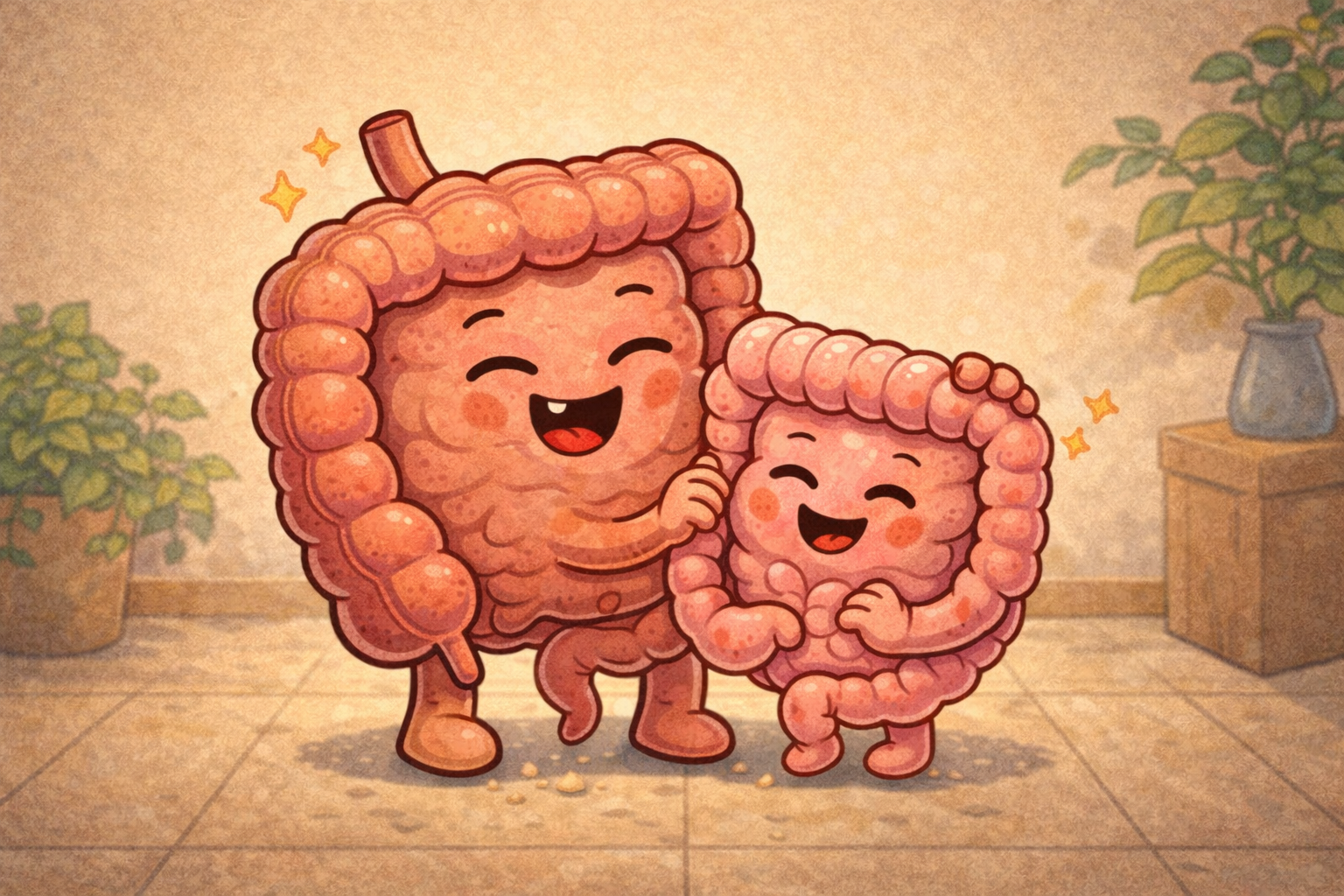
Organizer #7: Sammy & Larry in The Intestine Express
Deep inside your digestive system lives Sammy the Small Intestine, a long, twisting tube responsible for absorbing the nutrients your body needs to survive.
After food leaves the stomach, it arrives as a soupy mixture called chyme. Sammy immediately gets to work breaking down and absorbing important nutrients from the meal.
Lining Sammy’s walls are millions of tiny finger-like structures called villi and microvilli, which greatly increase surface area and help nutrients move into the bloodstream more efficiently.
Sugars are absorbed to provide energy.
Amino acids help build and repair tissues.
Fats are packaged and transported through the lymphatic system before entering circulation.
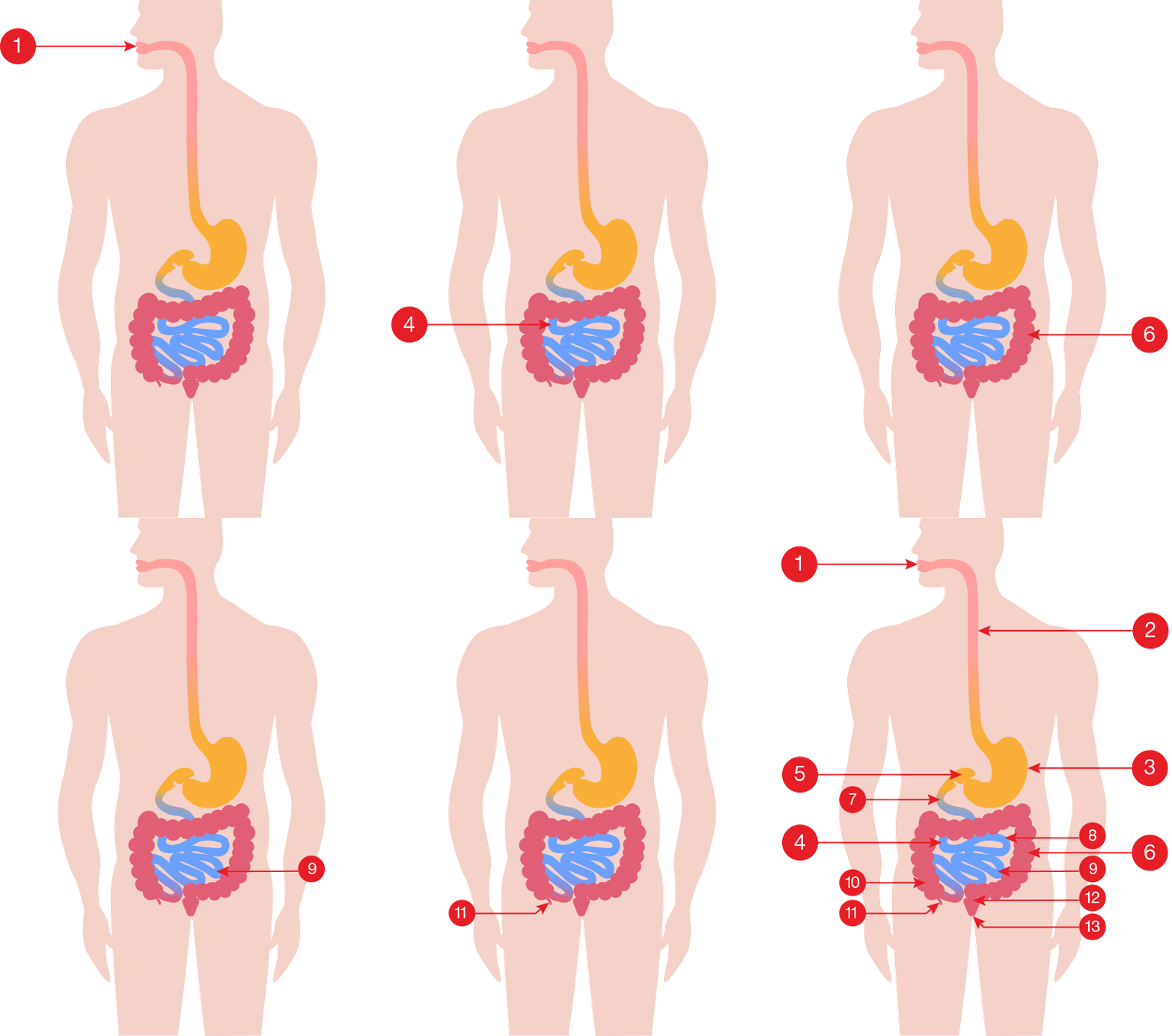
Sammy also works closely with other digestive organs. The pancreas sends digestive enzymes to break down carbohydrates, proteins, and fats, while the liver and gallbladder deliver bile to help absorb fats more effectively.
Once most nutrients have been collected, the remaining material moves into Larry the Large Intestine.
Unlike Sammy, Larry’s main job is reclaiming water and electrolytes to help maintain the body’s fluid balance and prevent dehydration.
Inside Larry lives trillions of helpful bacteria known as the gut microbiota. These microbes break down leftover fibers and produce beneficial compounds that support intestinal health and provide energy to cells lining the colon.
As water is removed, the remaining material becomes more solid and is eventually packaged into stool so the body can eliminate waste.
Together, the small and large intestines absorb nutrients, recover water, support healthy gut bacteria, and help keep the entire body fueled and balanced.