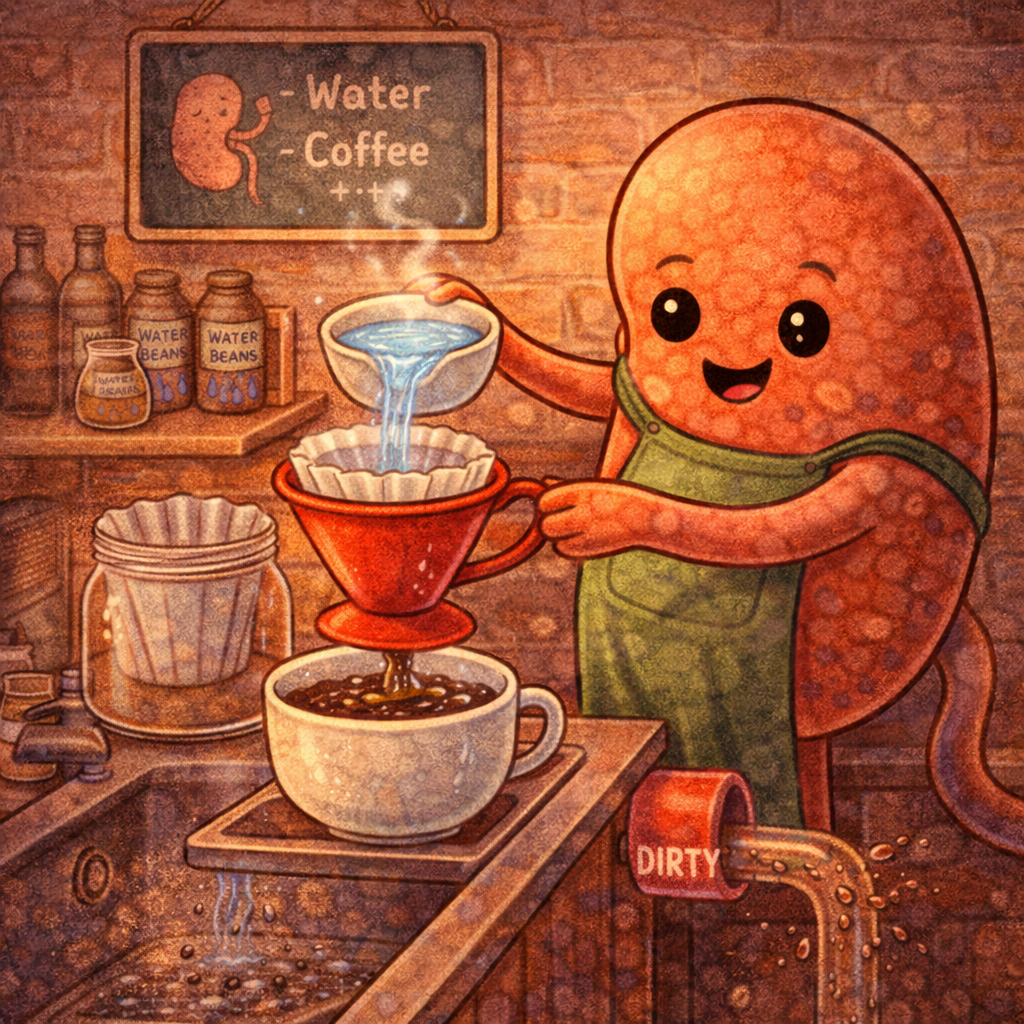
Organizer #5: Kelly the Kidney’s Clean-Up Crew
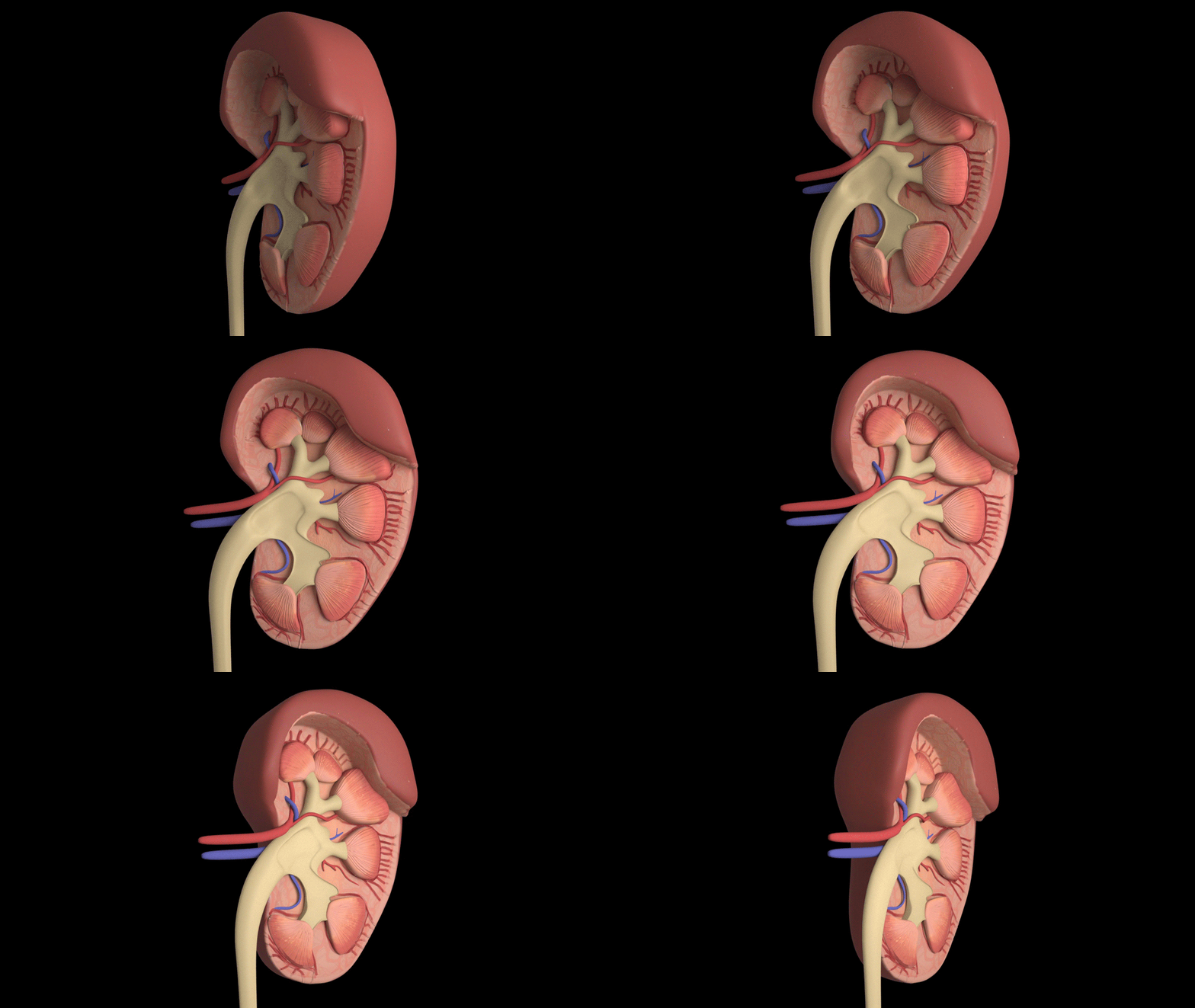
In a quiet corner of Body Town, tucked just behind the busy bloodstream highways, worked two careful guardians named Kelly and Kai the Kidneys.
Every minute, a river of blood rushed past them.
“Another delivery coming through,” Kelly said, watching the flow.
Kai nodded. “Time to check what the body needs—and what it doesn’t.”
Their job was one of the most important in Body Town: keeping the blood clean and balanced.
The Filtering Begins
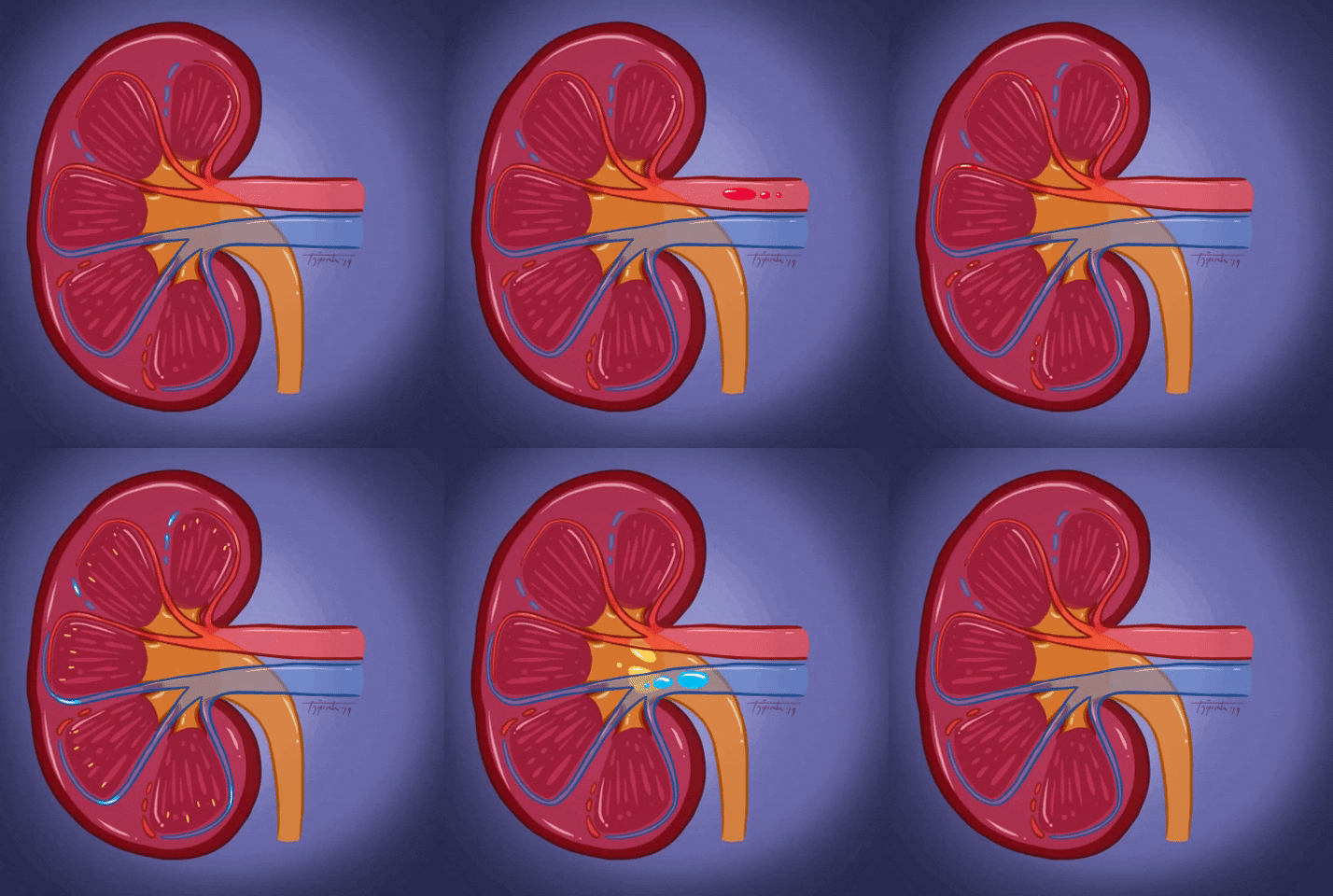
Blood entered the kidneys through a large vessel called the renal artery, carrying everything the body had collected throughout the day—nutrients, salts, water, and waste.
Inside Kelly and Kai were millions of tiny filtering stations called nephrons.
Each nephron had a special structure called a glomerulus, a tiny bundle of capillaries that acted like a microscopic sieve.
“Alright team,” Kelly said. “Let’s start filtering.”
As blood passed through the glomerulus, small molecules slipped through into a tube called the renal tubule.
Water, salts, glucose, amino acids, and waste products all entered this early fluid.
But Kelly raised a finger.
“Not so fast. We still have sorting to do.”
Sorting What the Body Needs
As the fluid traveled through the renal tubule, Kelly and Kai carefully inspected everything.
Helpful substances were sent back to the bloodstream.
“Glucose? The body needs that—send it back.”
“Amino acids? Definitely keep those.”
“Some water and electrolytes? Return them to maintain balance.”
Through this process of reabsorption, the kidneys made sure the body kept what it needed to function.
But some substances were not meant to stay.
“Creatinine and urea?” Kai said. “Those are waste from metabolism.”
“Leave those in the fluid,” Kelly replied.
The kidneys also adjusted levels of sodium, potassium, and other electrolytes, helping control blood pressure and maintain the body’s internal balance.
The Final Product
After all the filtering, sorting, and balancing, the remaining liquid became urine.
Kelly smiled.
“That’s the waste the body doesn’t need.”
The urine flowed into the renal pelvis, then down long tubes called the ureters, traveling toward the bladder where it would be stored until the body released it.
More Than Just Filters
But Kelly and Kai did more than remove waste.
They also helped regulate blood pressure, maintain fluid balance, and even release hormones that told the body to make more red blood cells when oxygen levels were low.
“We’re not just cleaners,” Kai said proudly. “We’re balance keepers.”